
Multi Screen IPTV Provider No Lag: 9 Smart Checks for 2026
A multi screen IPTV provider no lag setup can make television much easier in a busy household. One person can watch live football in the living room, somebody else can play a movie upstairs, another viewer can use a second television for entertainment, and a tablet can carry news or another sports stream at the same time. The idea is convenient, but several streams running together create a very different workload from one TV playing alone.
The biggest misunderstanding is that installing one IPTV account on several devices does not necessarily mean all of those devices can stream at once. Multiple-device compatibility and simultaneous connections are different. A proper multi screen IPTV provider no lag setup therefore starts with the number of concurrent streams the subscription allows, then moves into network quality, device performance, stream stability, and the way people in the home actually watch television.
This guide explains how to build and test a multi screen IPTV provider no lag setup around real household use rather than marketing claims. The goal is to find out whether several viewers can watch independently without one screen causing problems for another, and to identify whether lag comes from the subscription, the home network, one weak device, or an individual stream.
Table of Contents
What Makes a Multi Screen IPTV Provider No Lag Setup Actually Work?
A reliable multi screen IPTV provider no lag experience depends on four parts working together: the subscription, the internet connection, the home network, and the streaming devices. The subscription needs enough simultaneous connections. The internet connection needs enough stable capacity for several video streams. Wi-Fi or Ethernet must deliver that connection to each room, and every device needs to run its IPTV player comfortably.
If Xtreme HD IPTV is one service you are considering, begin with the current IPTV channel list and prepare your devices with the IPTV installation guide. Use the IPTV free trial when available, but verify the number of simultaneous connections included with the trial and paid plan separately. Once the multi screen IPTV provider no lag setup performs correctly, compare the current subscription pricing.
Four Parts of the Setup Need to Work Together
| Part | What It Controls | Typical Problem |
|---|---|---|
| Subscription | Concurrent stream allowance | Another screen disconnects when a new one starts |
| Internet connection | Total bandwidth and stability | Several screens buffer under heavy load |
| Wi-Fi or Ethernet | Connection quality in each room | Only one distant TV struggles |
| Device and player | Playback, EPG, navigation, decoding | One older device freezes or crashes |
This separation matters because the word “lag” does not explain the cause. A multi screen IPTV provider no lag test becomes much more useful when you can identify which part of the chain is failing instead of treating every interruption as a provider problem.
How Many Simultaneous Connections Does Your Household Really Need?
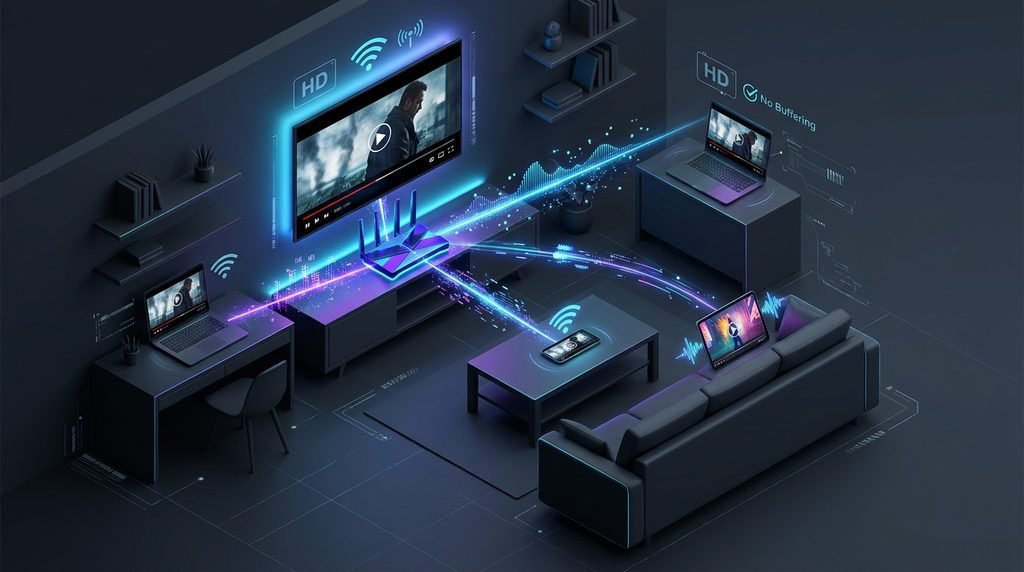
Do not start by counting every TV, phone, tablet, and streaming box you own. Count the number of people who normally watch different content at the same time. A solo viewer may have IPTV installed on four devices while still needing only one connection. A couple might occasionally need two. A family with several independent viewers could realistically need three or four.

Use Your Busiest Evening as the Real Test
Imagine the busiest Saturday evening in your home. Football is playing in the living room, a movie is running upstairs, children’s programming is on another screen, and somebody wants a second sports event on a tablet. That is the situation a multi screen IPTV provider no lag subscription needs to support. If this rarely happens, you may not need four connections. If it happens regularly, buying too few will create constant conflicts.
| Household Situation | Typical Need | What to Confirm |
|---|---|---|
| Solo viewer | 1 active stream | Whether one connection can be used across your devices at different times |
| Two independent viewers | 2 streams | Two simultaneous connections |
| Family household | 2–3 streams | Enough capacity for normal evening use |
| Larger household | 3–4+ streams | Higher connection plans |
| Sports multiview | Potentially several streams | Player and provider connection rules |
The right multi screen IPTV provider no lag plan is not the one advertising the largest number of screens. It is the plan that covers your real peak usage without making you pay for connections that sit unused most of the week.
Multiple Devices Are Not the Same as Simultaneous Streams
This is the most important distinction in multi-room IPTV. Multiple-device support usually means an account or player can be configured on several pieces of hardware. Simultaneous streaming determines how many of those devices can actually play content at the same moment. A multi screen IPTV provider no lag subscription must explicitly support the second requirement if several people want independent viewing.
Why Connection Limits Can Look Like Lag
Imagine the account works perfectly on a Fire TV, bedroom Smart TV, Android box, and tablet when you test each device separately. Then somebody starts a second stream while the first television is still playing. One screen disconnects, a channel refuses to open, or the player keeps reconnecting. It is easy to blame server performance, but the account may simply be exceeding its allowed number of active streams.
If a multi screen IPTV provider no lag setup works with one television and repeatedly breaks the moment another stream starts, confirm the concurrent connection limit before changing routers, reinstalling applications, or replacing the multi screen IPTV provider no lag service. That single check can eliminate a surprising amount of unnecessary troubleshooting.
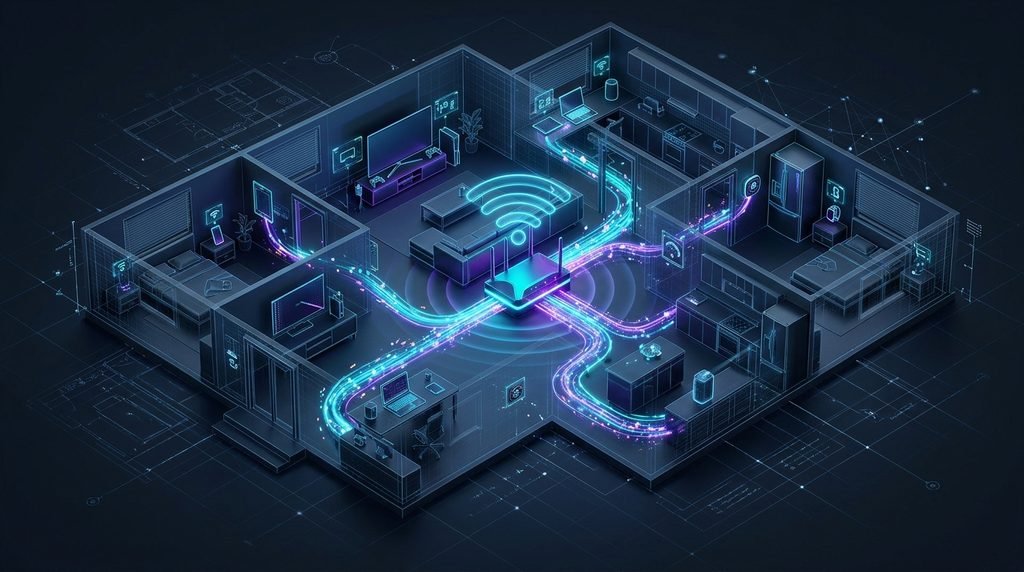
Can Your Home Network Handle Several IPTV Streams at Once?
Every active television needs a continuous flow of video data, and all of those streams usually share the same internet connection. At the same time, household members may be gaming, making video calls, downloading files, using cloud storage, or watching other streaming platforms. A multi screen IPTV provider no lag setup has to coexist with that normal activity.
Stable Internet Matters More Than One Huge Speed-Test Number
There is no single speed figure that guarantees flawless IPTV because bitrate, compression, resolution, and source quality vary. A fast connection that experiences frequent short drops can still create a poor live-TV experience. Consistency becomes even more important when several streams are active together.
Every Room Has Different Wi-Fi Conditions
The television beside the router may work flawlessly while a bedroom on another floor receives a weaker signal through several walls. If only one screen has problems, test network quality in that room instead of assuming the multi screen IPTV provider no lag service is responsible. A multi screen IPTV provider no lag test should cover every regular viewing location, not just the strongest Wi-Fi spot in the house.
Use Ethernet to Improve Stability and Diagnose Wi-Fi Problems
Ethernet can be valuable for fixed devices such as a living-room streaming box or television. You do not have to wire the whole house. Connecting one or two heavily used screens can reduce wireless demand and provide a more consistent connection. It is also an excellent troubleshooting test.
If one television constantly freezes on Wi-Fi, temporarily connect it by Ethernet when possible. If the same streams become stable, Wi-Fi was likely contributing. If the problem continues while other wired apps work correctly, the player, individual stream, account, or multi screen IPTV provider no lag service becomes more suspicious.
Does Every TV Need the Same Streaming Device?
No. A household can mix Fire TV, Android TV, Google TV, NVIDIA Shield, Apple TV, Samsung or LG Smart TVs, phones, tablets, and computers when compatible IPTV players are available. The problem is that those devices do not all have the same processing power, storage, memory, or app support.
The Weakest Device Can Make the Whole Service Look Bad
Large playlists and detailed EPG databases can feel heavy on older Smart TVs. If two modern streaming devices run smoothly while one older television crashes or freezes, test an external streamer on that screen before replacing the multi screen IPTV provider no lag subscription. A small hardware change can sometimes solve the weakest room.
The installation guide can help you understand the setup options available across common devices. The important thing is to evaluate each screen using hardware that can comfortably run the chosen player.

Multi-Screen IPTV vs. Multiview: What Is the Difference?
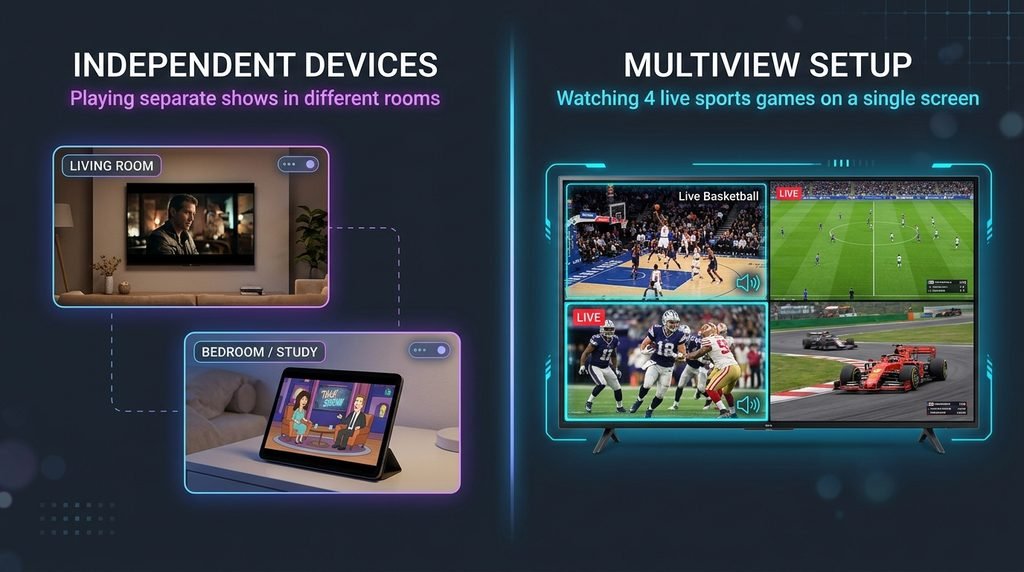
Multi-screen IPTV usually means several separate devices playing different streams simultaneously. Multiview normally means one television displays several live channels at once. The difference matters because one physical television running four windows may still be receiving four separate video streams.
One TV Can Still Use Several Connections
If a multiview player opens four independent feeds, the multi screen IPTV provider no lag service may count those as multiple connections depending on its rules. Never assume one television automatically equals one connection. Verify how the multi screen IPTV provider no lag plan handles multiview before relying on a four-window sports setup.
Multiview can also be harder on one streaming device because it must decode several videos simultaneously. If four separate screens work properly while four-way multiview struggles, the hardware running the player may be the limitation rather than the multi screen IPTV provider no lag service.
EPG and Favorites Matter More When Everyone Watches Something Different
A large shared playlist can become difficult to navigate in a family. One person may live in the sports section, another wants movies, somebody else watches news, and another viewer follows international channels. A multi screen IPTV provider no lag experience should therefore be easy to use independently from screen to screen.
Give Each Screen Its Own Practical Favorites List
Create favorites on every device when the player supports them. The living room can prioritize sports and entertainment while another television keeps movies, children’s content, or international channels near the top. EPG quality matters for the same reason: viewers should be able to see what is playing and choose content without depending on whoever configured the account.
A well-organized multi screen IPTV provider no lag setup should feel like several independent television experiences using one household subscription rather than one giant playlist that everybody struggles to navigate.
Test the Multi-Screen Setup Before Paying for Extra Connections
Multi-connection subscriptions can cost more than single-screen plans, so trial access is valuable when available. Prepare the players and devices first, make sure each important room has a usable network connection, and then activate the IPTV free trial if you are considering Xtreme HD IPTV.
Check Whether the Trial and Paid Plan Allow the Same Number of Streams
A trial may have different connection rules from a paid multi-screen package. Confirm the trial allowance rather than assuming it can automatically run three or four screens. If multi-screen testing is permitted, recreate your busiest household situation. If the trial allows only one stream, use it to judge channels, device compatibility, EPG, picture quality, and individual stability while confirming the paid connection allowance separately.
The purpose of a multi screen IPTV provider no lag trial is not simply to prove that a channel opens. It should reduce uncertainty about the exact setup you intend to use after paying.
The Most Common Mistakes With Multi-Screen IPTV
The most common mistakes come from incorrect assumptions rather than complicated technical failures. Buyers count devices instead of simultaneous viewers, test televisions one at a time, blame the multi screen IPTV provider no lag service for one weak Wi-Fi room, or assume an old Smart TV should perform exactly like a modern streaming box.
- Buying more simultaneous connections than the household actually uses.
- Buying too few connections for the busiest viewing period.
- Testing each screen separately instead of running them together.
- Replacing the multi screen IPTV provider no lag service when only one room has poor Wi-Fi.
- Assuming every streaming device handles large playlists equally well.
- Choosing 4K labels over stable real-world playback.
- Assuming multiview always counts as one connection because it uses one TV.
A good multi screen IPTV provider no lag decision comes from testing the exact household situation rather than guessing. Once you know when a problem starts and which screens it affects, the cause becomes much easier to isolate.

Frequently Asked Questions About Multi-Screen IPTV
What Is a Multi-Screen IPTV Provider?
A multi-screen IPTV provider normally offers plans that can support more than one active IPTV stream at the same time. Exact connection allowances vary, so check the individual subscription instead of assuming that installation on several devices means several simultaneous streams.
Can I Watch IPTV on Two TVs at the Same Time?
Yes, provided the account permits at least two concurrent streams and both televisions have compatible players or streaming devices. Test both screens together when evaluating a multi screen IPTV provider no lag setup.
Can IPTV Work on Three or Four Screens?
Yes, when the subscription allows enough simultaneous connections, the network has stable capacity, and each device can handle the stream correctly. As more screens are added, network and hardware differences become more important.
Why Does IPTV Lag When Another TV Starts?
Possible causes include exceeding the account’s connection allowance, higher network demand, Wi-Fi congestion, router limitations, or provider-side problems. If the issue begins exactly when another screen starts, check the connection limit first.
Is Ethernet Better for Multi-Screen IPTV?
Ethernet can improve consistency on fixed devices and remove Wi-Fi variables. It does not need to be used on every television, but it can be useful for important screens and troubleshooting a multi screen IPTV provider no lag setup.
Final Verdict: Choosing a Multi Screen IPTV Provider No Lag Setup
Finding a multi screen IPTV provider no lag option is mainly about matching the subscription to the household. Start with the number of people who genuinely watch different content at the same time, not the total number of TVs, phones, and tablets you own. Confirm that the paid package explicitly supports enough concurrent streams for that busiest viewing period.
Check the current IPTV channel list so everyone has the content they want, prepare the devices through the installation guide, and use the IPTV free trial when available. Test the screens together, use different channels, include live sports or another demanding session, and leave everything running long enough to judge stability.
If one screen struggles while everything else remains smooth, investigate that room, Wi-Fi connection, device, and player. If all screens fail together, check the connection allowance, router, internet connection, and provider. Once the multi screen IPTV provider no lag setup passes those real-world tests, compare the current subscription pricing and pay only for the number of simultaneous connections you realistically need.
The best multi screen IPTV provider no lag experience is not the package advertising the most screens. A multi screen IPTV provider no lag setup is best when the subscription rules, network, hardware, and streams work together well enough that several people can watch independently without constantly noticing the technology behind the television.