Affordable Cable TV Options: 2026 Guide to Low-Cost TV
Quick Answer
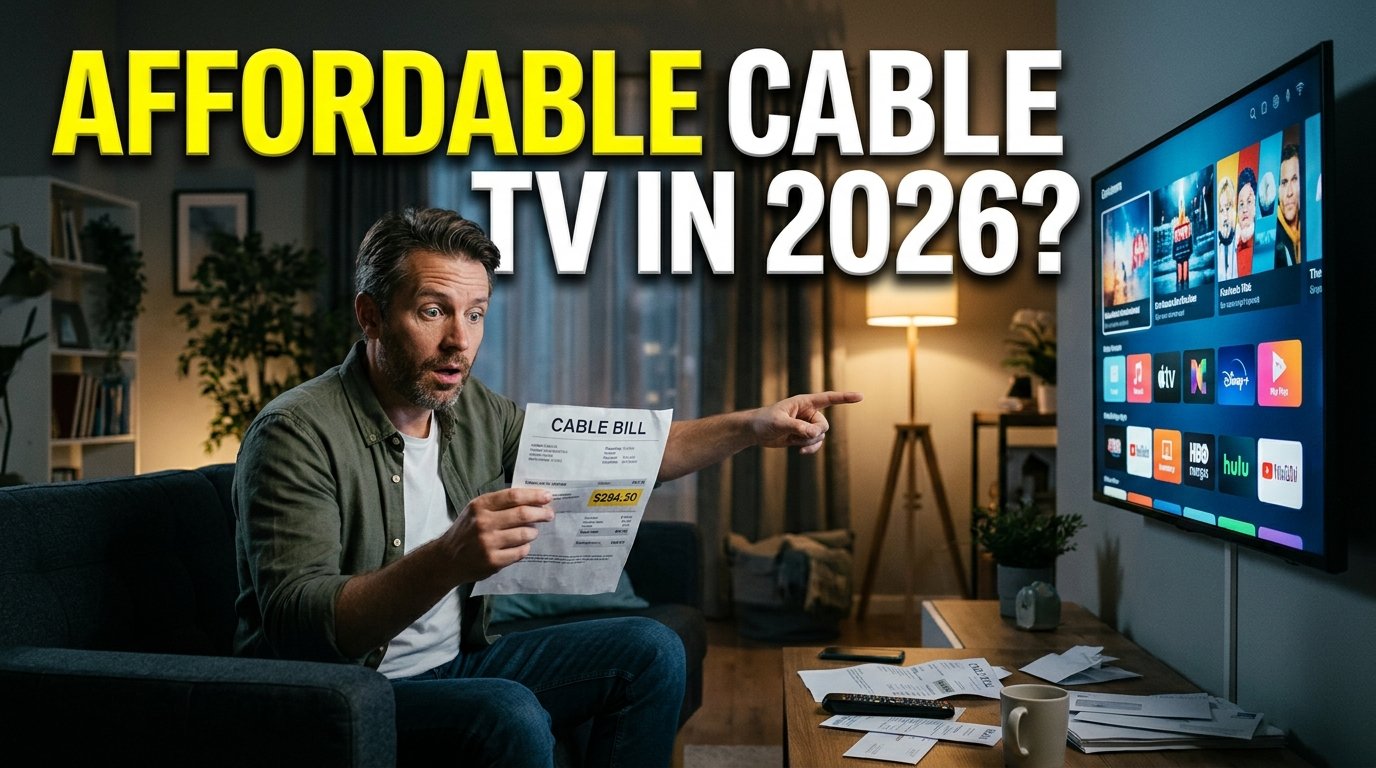
Finding affordable cable tv in 2026 requires looking beyond traditional coaxial cable providers, whose bills routinely top $120 per month due to hidden box rentals and broadcast fees. American households can lower monthly costs by combining digital over-the-air (OTA) antennas, budget skinny streaming bundles, or next-generation streaming protocols like Xtreme HD IPTV. This comprehensive guide outlines the leading low-cost television platforms, technical setup needs, and total cost evaluations to help you eliminate unnecessary broadcast markups.
Editorial Transparency & Trust Methodology
- Author: Editorial Content Team at Xtreme HD IPTV
- Basis of Analysis: Compiled from publicly available broadcast engineering documentation, official platform hardware specifications, and public pricing data as of late 2026.
- Criteria Evaluated: Monthly fee transparency, bandwidth efficiency, multi-device support, Electronic Program Guide (EPG) functionality, and hardware setup complexity.
- Last Updated: November 2026.
Table of Contents
What Are the Best Affordable Cable TV Options for 2026?
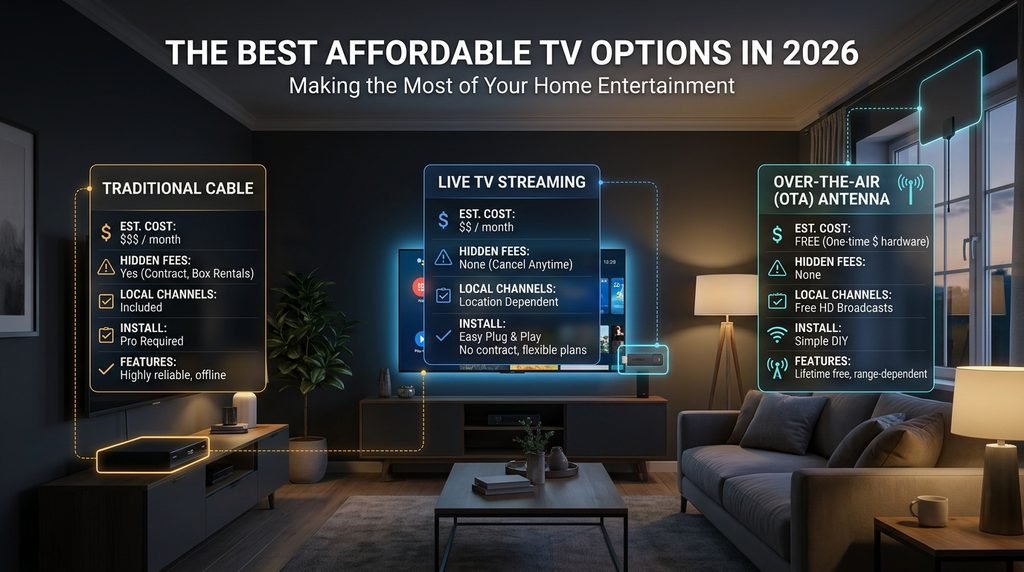
Finding an affordable cable tv solution starts with recognizing that conventional cable television relies on outdated regional distribution networks burdened with excessive fees. Modern cord-cutters have shifted toward internet-delivered television and digital broadcast reception to maintain access to live sports, local news, and primetime entertainment. By leveraging standard internet connections, consumers can choose modular entertainment setups that drastically lower monthly expenses without sacrificing broadcast variety.
Comparing Hidden Fees: Traditional Cable vs. Digital Alternatives
Traditional cable packages often advertise a low promotional rate that inflates significantly once equipment rentals, regional sports fees, and local broadcast surcharges are added to the monthly statement. Over a 12-month period, these supplementary line items can add $400 to $600 to an otherwise standard service agreement.
Digital alternatives remove the need for proprietary hardware rentals by running directly on consumer streaming devices like Amazon Firesticks, Android TV boxes, Apple TV, and Smart TVs.
Average Monthly TV Expenses (US Market Comparison)
----------------------------------------------------------------------
Traditional Cable Package  : [$$$$$$$$$$$$$$$$$$$$] $127/mo (Base + Fees)
Skinny Streaming Bundles   : [$$$$$$$$$$$$]        $50 - $85/mo
Digital Antenna + IPTV Hybrid: [$$$]             $15 - $25/mo
----------------------------------------------------------------------
According to public industry metrics compiled by the Federal Communications Commission (FCC) on media competition, regional broadcast fees represent the fastest-growing line item on legacy cable bills. Replacing legacy set-top boxes with IP-based streaming applications eliminates recurring monthly rental penalties entirely.
Evaluating Over-the-Air Antennas and Free Streaming Networks
For consumers seeking absolute baseline costs, a digital over-the-air (OTA) antenna provides uncompressed High Definition (HD) broadcasts of local major networks—including ABC, CBS, NBC, FOX, and PBS—for a single upfront hardware purchase of $20 to $50. Because digital antennas receive signals directly from broadcast towers, picture quality is often superior to compressed cable feeds.
Free Ad-supported Streaming TV (FAST) platforms such as Pluto TV, Tubi, and The Roku Channel supplement digital antennas by providing thousands of linear channels and on-demand movies at zero monthly cost. While FAST networks offer extensive classic television, news clips, and niche movies, they lack live premium channel selections and high-demand live sports networks.
Key Takeaway: Pairing an OTA digital antenna with free streaming platforms creates a zero-monthly-cost baseline for local news and casual viewing.
How Do Live Streaming Bundles and Modern IPTV Compare?
When moving beyond free antenna channels, viewers seeking an affordable cable tv experience must choose between subscription-based skinny streaming bundles and Internet Protocol Television (IPTV) architectures. Understanding the technical and commercial differences between these formats ensures you select a platform that fits both your budget and technical hardware setup.
Skinny Streaming Bundles vs. Next-Gen IPTV Architecture
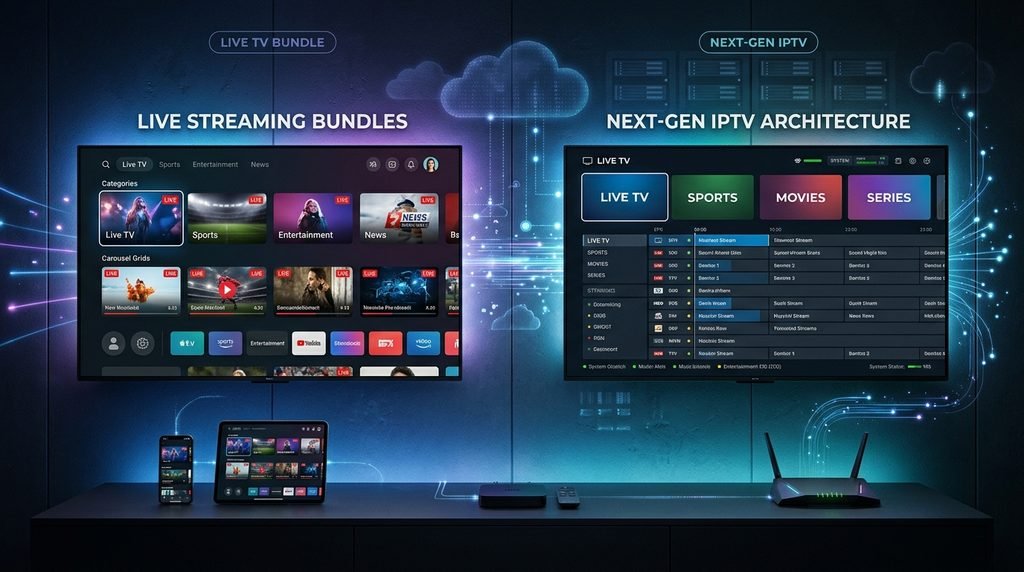
Over-the-Top (OTT) skinny bundles compress traditional cable packages into streamlined app subscriptions delivered over public internet lines. Services like Sling TV or Philo restrict channel lineups to specific tiers to maintain lower price points ($25–$55/month), though users often find that adding missing sports or regional channels quickly drives prices back toward conventional cable rates.
Next-generation IPTV infrastructure, utilized by platforms like Xtreme HD IPTV, delivers live channels and video-on-demand (VOD) directly through optimized IP streaming protocols. By operating through custom application interfaces or standard media player engines (such as TiviMate or XCIPTV), IPTV platforms deliver expansive channel lineups and global coverage at a fraction of the overhead associated with legacy satellite or cable infrastructure.
Feature and Hardware Comparison Matrix
The following decision aid compares core technical specifications, cost structures, and operational features across traditional cable, OTT skinny bundles, and Xtreme HD IPTV streaming protocols.
| Feature / Criteria | Traditional Cable | OTT Skinny Bundles | Xtreme HD IPTV |
| Average Monthly Cost | $120 – $160+ | $25 – $85 | Budget Subscription |
| Hardware Requirements | Proprietary Cable Box | Smart TV / Streaming Stick | Firestick, Android TV, Smart TV |
| Broadcast Delivery | Coaxial / Fiber Lines | Public OTT Streaming | IP Protocol / Xtream Codes API |
| Broadcast Resolution | 720p / 1080i compressed | 1080p / Select 4K | HD / Full HD / 4K Supported |
| Electronic Program Guide | Built-in Receiver EPG | Native App Interface | Integrated Interactive EPG |
| Contract Commitments | 12 to 24 Months Typical | Month-to-Month | Flexible Subscription Terms |
| Multi-Room Support | Extra Box Fee Per TV | Limited Concurrent Streams | Multi-Connection Support |
Basis of comparison: Documentation provided by platform technical guides and industry pricing averages as of 2026.
Key Takeaway: While OTT bundles offer familiar corporate subscription models, high-efficiency IPTV services provide broader channel access across versatile media players without mandatory hardware rental contracts.
What Key Features Determine the True Value of a TV Alternative?
Selecting an affordable cable tv alternative requires evaluating system stability, user interface responsiveness, and playback quality. A service with a lower headline price offers poor real-world value if constant buffering or broken program guides disrupt your daily entertainment.
Bandwidth Requirements and Anti-Freeze Infrastructure
Streaming high-definition television live requires a stable, adequately managed home internet connection. Standard Definition (SD) streams typically demand 3–5 Mbps per device, High Definition (HD 1080p) streams require 8–12 Mbps, and Ultra High Definition (4K) content requires 25 Mbps or higher of sustained throughput.
Minimum Sustained Internet Bandwidth Per Active Stream
------------------------------------------------------
SD Streaming (480p)  : [===] 5 Mbps
HD Streaming (1080p) : [========] 12 Mbps
4K UHD Streaming     : [=========================] 25 Mbps
------------------------------------------------------
To maintain stable performance during peak viewing hours—such as high-profile sporting events or primetime news broadcasts—providers rely on robust server load balancing. Advanced architectures like Xtreme HD IPTV utilize anti-freeze server distribution, routing video packets through optimized global data centers to prevent packet loss and mid-stream freezing.
Official network setup documentation hosted by hardware vendors like Amazon Fire TV Support emphasizes connecting streaming hardware to 5 GHz Wi-Fi bands or direct Ethernet adapters to reduce local wireless latency.
Electronic Program Guides (EPG) and Multi-Device Compatibility
A critical component of the traditional cable experience is the Electronic Program Guide (EPG), which displays real-time broadcast schedules, channel numbers, and program descriptions. Modern IPTV services format EPG data via XMLTV feeds or integrated Xtream Codes application programming interfaces (APIs). This allows compatible software on Android TV, Amazon Firestick, or iOS devices to render intuitive grid layouts identical to traditional cable menus.
For modern multi-device households, flexibility is essential. Selecting a service that supports simultaneous connections allows different family members to stream live sports in the living room while watching on-demand programming on a tablet or bedroom media player.
Key Takeaway: Prioritize platforms offering anti-freeze server routing, comprehensive EPG integration, and multi-screen streaming options to ensure an effortless cord-cutting transition.
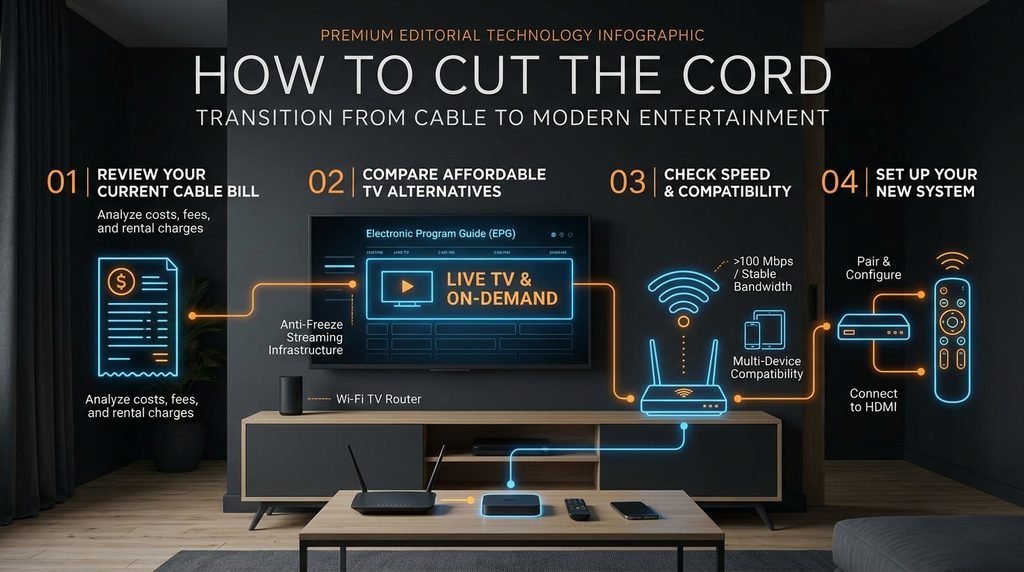
How to Transition from Expensive Cable in 4 Practical Steps
Replacing a traditional cable setup with an affordable cable tv streaming configuration is a simple process when executed logically. Follow this step-by-step checklist to cut your monthly bill while retaining your favorite live channels.
- Audit Your Household Watching Habits:List the absolute must-have channels for your home, such as local news affiliates, live sports networks, or specific lifestyle channels. Distinguish between live broadcast needs and on-demand show catalogs to avoid purchasing unnecessary channel packages.
- Select Your Core Hardware and Streaming Apps:Install dedicated media players on your television. Devices like the Amazon Fire TV Stick 4K or Android TV boxes provide high processing speeds and broad application support for platforms like Xtreme HD IPTV, IPTV Smarters, or TiviMate.
- Optimize Your Home Wi-Fi Network:Verify that your internet service provides at least 25–50 Mbps download speeds if multiple devices will stream simultaneously. Position your router near your primary streaming devices or connect directly via an Ethernet cable to ensure uninterrupted data delivery.
- Test Platforms with Short-Term Passes Before Canceling Cable:Before terminating your existing cable contract, test your new streaming setup using short-term trial options or month-to-month passes. Confirm that image quality, channel loading speed, and EPG schedule syncing meet your expectations before returning your legacy set-top boxes.
Frequently Asked Questions
Can I watch local channels without a traditional cable subscription?
Yes, local broadcast channels like ABC, CBS, NBC, and FOX can be accessed for free using a digital over-the-air (OTA) antenna. Additionally, many live streaming services and IPTV platforms include local network feeds directly within their linear channel lineups.
What internet speed is required to stream live TV without buffering?
A minimum download speed of 8–12 Mbps is recommended for smooth High Definition (HD) live streaming on a single device. For households streaming 4K content or running multiple devices simultaneously, an internet connection of 25 to 50 Mbps or higher is ideal.
Do affordable cable alternatives require contract agreements?
Most digital cable alternatives operate on month-to-month subscription models with no long-term contracts. Users can upgrade, downgrade, or cancel their plans at any time without incurring early termination penalties common with legacy cable providers.
How does Xtreme HD IPTV work on a Firestick or Smart TV?
Xtreme HD IPTV operates by delivering live stream playlists directly to compatible IPTV player applications via M3U URLs or Xtream Codes credentials. Users simply download an IPTV application on their Firestick or Smart TV and input their account details to access live channels and EPG schedules.
Will switching to a cable alternative save money on monthly bills?
Yes, most households save between $600 and $1,200 annually by transitioning from legacy cable to low-cost streaming options. Savings result from eliminating hardware rental fees, broadcast surcharges, and costly multi-channel bundles.
What hardware is needed to replace a cable receiver box?
You can replace a traditional cable receiver box using affordable media devices such as an Amazon Firestick, Google Chromecast with Google TV, Apple TV, or Android TV box. Many recent Smart TVs can also run streaming apps directly without external hardware.
Next-Step Action Plan
To start reducing your entertainment costs today, audit your current monthly TV bill to identify hardware rental fees, then test an affordable cable tv alternative-such as pairing an OTA antenna with an Xtreme HD IPTV short-term pass—on your streaming device.