
Internet and TV Packages Near Me: 2026 Comparison Guide

Quick Answer: Finding the best internet and tv packages near me requires evaluating your local broadband infrastructure alongside flexible video services. While cable and fiber providers offer traditional bundled packages, many households achieve significant savings by locking in standalone home internet (such as 300 Mbps fiber or 5G home internet) and pairing it with app-based live TV services like Xtreme HD IPTV for multi-device streaming without long-term contracts.
Table of Contents
How to Compare Internet and TV Packages Near Me?
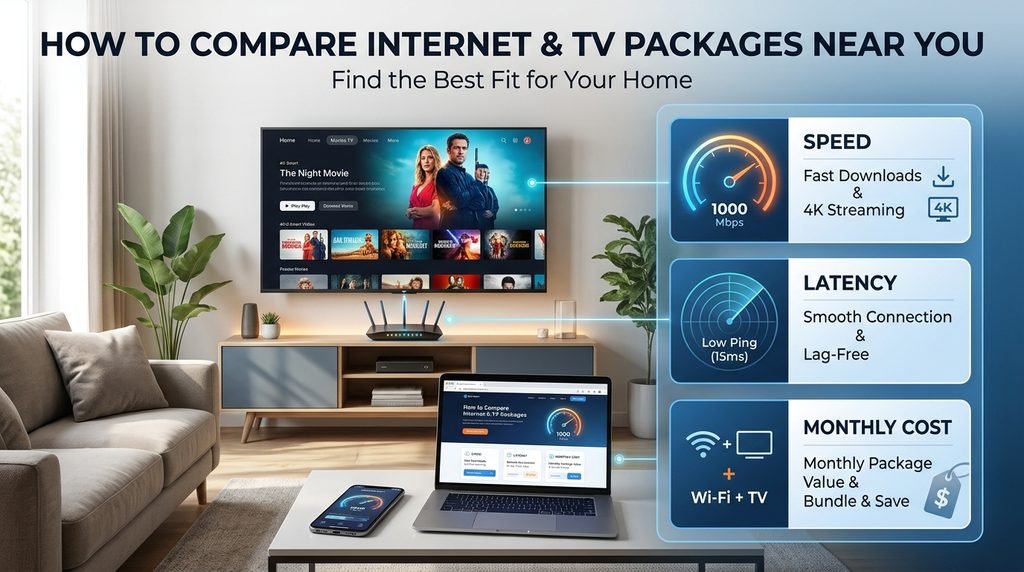
Comparing internet and tv packages near me starts with identifying the network infrastructure deployed in your neighborhood. Cable, fiber-optic, and 5G home internet networks each deliver distinct download speeds, upload rates, and latency profiles. Selecting the right combination depends on your household’s total connected devices, simultaneous 4K streams, and interactive gaming needs.
       [ Local Broadband Options ]
                    |
      +-------------+-------------+
      |                           |
[ Fiber Broadband ]       [ Cable / 5G Broadband ]
(Symmetrical Speeds)      (Asymmetrical Speeds)
      |                           |
      +-------------+-------------+
                    |
      [ Choose TV Delivery Method ]
                    |
      +-------------+-------------+
      |                           |
[ Legacy Cable TV ]       [ Modern IPTV / App Stream ]
(Contract / Set-Top Box)  (No Contract / Multi-Device)
Evaluating Broadband Speeds and Latency Requirements
Modern home entertainment relies on high-speed internet to deliver high-definition and 4K video playback. Standard-definition streams require approximately 3 Mbps, high-definition (1080p) streams require 5 Mbps to 10 Mbps, and 4K Ultra HD streams demand at least 25 Mbps of dedicated download bandwidth per screen, according to the Federal Communications Commission (FCC).
For households running multiple smart TVs, mobile phones, and laptops at once, a connection starting at 300 Mbps provides sufficient headroom to prevent video buffering during peak evening usage hours. Latency, measured in milliseconds (ms), measures how quickly data travels from servers to your receiver device; low latency under 50 ms is vital for live sports streaming and real-time interaction.
Understanding Fiber, Cable, and 5G Home Internet Networks
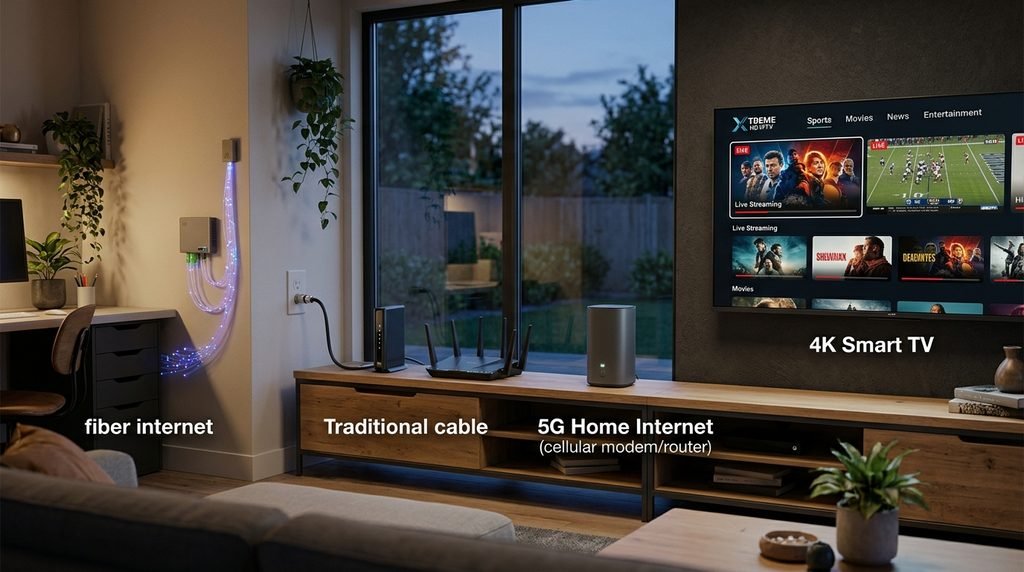
Fiber-optic internet transfers data using light pulses through glass strands, delivering symmetrical download and upload speeds up to 1,000 Mbps or higher with minimal signal degradation. Cable internet operates over coaxial lines, providing high download speeds but restricted upload rates.
Fixed 5G home internet broadcasts high-speed data over wireless cellular towers to a indoor gateway, offering an alternative in areas where physical wired infrastructure is limited. When setting up your home network, pairing robust fiber or fast cable internet with high-performance video apps like Xtreme HD IPTV allows your primary screens to maintain uninterrupted live HD streaming without relying on legacy cable set-top hardware.
What Are the Most Popular Provider Options by Network Type?
Selecting internet and tv packages near me depends heavily on service availability in your immediate region. Major telecommunications companies hold specific geographic footprints across the United States.
Traditional Cable and Fiber Internet Providers
Traditional service providers deliver bundled options combining wired internet access with proprietary broadcast packages:
- Xfinity (Comcast): Operates widespread cable networks across northern and eastern regions, offering broadband speeds ranging from 300 Mbps to 1,200 Mbps alongside broadcast TV packages.
- Spectrum (Charter Communications): Covers major portions of the Midwest, South, and West Coast with contract-free cable broadband and optional streaming TV add-ons.
- AT&T Fiber: Serves metropolitan markets across the Sunbelt and Midwest with symmetrical fiber connections starting at 300 Mbps.
- Verizon Fios: Offers fiber-optic service in major mid-Atlantic and Northeastern metropolitan areas.
Pairing Broadband Internet with Modern Live TV Streaming Services
Rather than locking into expensive double-play legacy packages, consumers increasingly purchase unbundled, standalone internet and pair it with live internet protocol television (IPTV) apps. A high-speed internet connection supplied by your local network provider gives you the physical pipe, while modern streaming solutions deliver live channel access directly across your connected devices.
Using Xtreme HD IPTV on devices like an Amazon Firestick, Android TV box, or Smart TV gives viewers flexible access to live entertainment and sports networks across multiple rooms without requiring additional cable box rentals.
How Much Do Home Internet and TV Setup Bundles Cost?
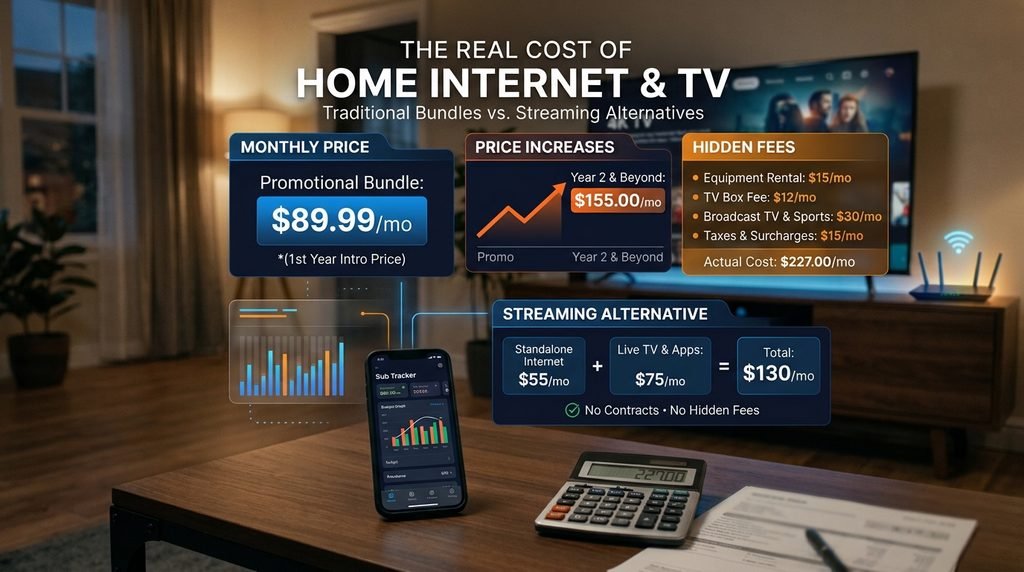
Understanding the total cost of internet and tv packages near me requires examining introductory rates, regular post-promotional prices, mandatory equipment rentals, and broadcast fee surcharges.
Identifying Second-Year Price Hikes and Rental Equipment Fees
Traditional double-play packages frequently market low introductory rates that increase substantially after 12 to 24 months. In addition to promotional price adjustments, legacy TV billing statements often include extra recurring charges:
- TV Receiver Fees: Traditional providers charge monthly rental fees for every cable box installed in your house ($10–$15 per box monthly).
- Regional Sports Surcharges: Mandatory localized fees added to television bills regardless of personal viewing habits.
- Broadcast TV Fees: Pass-through fees for local network affiliate transmissions ($15–$25 monthly).
Unbundling Cable: Combining Standalone Internet with Xtreme HD IPTV
The comparison table below details illustrative market cost structures between traditional legacy bundles and an unbundled setup pairing standalone internet with Xtreme HD IPTV.
| Package Component / Feature | Legacy Cable & Internet Bundle (Typical) | Standalone Internet + Xtreme HD IPTV Setup |
| Typical Monthly Internet Cost | Included in bundle ($80 – $130/mo intro) | $45 – $65/mo (300 Mbps Standalone) |
| Video Service Cost | Bundled ($60 – $110/mo base rate) | Flexible subscription (App-based) |
| Hardware Rental Fees | $10 – $15/mo per TV set-top box | $0 (Uses streaming devices like Firestick) |
| Contract Commitments | 12 to 24-month service agreements | No long-term TV contracts |
| Price Hikes after Year 1 | Common ($30 – $60/mo increase) | Transparent internet base rate |
| Supported Viewing Screens | Restricted to wired box locations | Smart TVs, Firestick, Mobile, PC, Tablets |
Note: Illustrative market comparison based on publicly disclosed provider rate structures for 2026. Standalone internet rates vary by local broadband provider.
By securing a fast, reliable internet-only plan from your local internet provider and utilizing Xtreme HD IPTV for live broadcast viewing, you bypass hardware lease fees and lock-in contracts while enjoying high-definition live TV streaming across your home devices.
Editorial Methodology & Verification Notice
- Editorial Team: Editorial Staff
- Evaluation Criteria: Network infrastructure availability, bandwidth requirements, promotional pricing transparency, equipment fee structures, and app compatibility.
- Last Updated: October 26, 2026
- Source Integrity: Data sourced from official broadband carrier disclosures, FCC connectivity guidelines, and verified technology standards.
Frequently Asked Questions
What is the average cost of internet and TV packages?
Traditional cable internet and TV packages typically start between $85 and $130 per month during initial promotional periods. Second-year rate increases, equipment rental fees, and local broadcast surcharges can raise total monthly costs to $150–$200 depending on location and channel selection.
Can I get high-speed internet without buying a cable TV bundle?
Yes, major broadband providers offer standalone internet plans without requiring a traditional cable subscription. Standalone plans allow households to choose their internet speed and pair it independently with app-based streaming services.
What internet speed do I need for smooth live TV streaming?
A minimum download speed of 25 Mbps per stream is recommended for smooth 4K Ultra HD streaming, while 5 Mbps to 10 Mbps is sufficient for HD 1080p. Households with multiple connected screens generally benefit from internet plans offering 300 Mbps or higher.
Do I need a set-top box to stream live channels on Xtreme HD IPTV?
No, modern streaming solutions do not require dedicated cable box rentals. Services like Xtreme HD IPTV run via compatible apps on standard streaming hardware, including Amazon Firestick, Android TV boxes, Smart TVs, and mobile devices.
Is fiber internet better than cable for watching live TV streams?
Fiber internet offers symmetrical download and upload speeds with lower latency, making it optimal for live TV streaming, sports viewing, and online gaming. However, fast cable internet (300+ Mbps) also handles live HD streaming effectively.
Next Steps for Building Your Ideal Home Setup
To optimize your home entertainment while controlling monthly costs, audit your current bill to identify equipment rental fees and promotional expiration dates. Compare local standalone high-speed internet options in your area, select a reliable bandwidth tier of 300 Mbps or higher, and explore how Xtreme HD IPTV can fulfill your live TV and sports streaming needs without traditional cable contracts.