
Is Free TV Free? The Truth About Costs, Ads, & Alternatives
Yes, is free tv free in terms of zero monthly subscription fees, but it is rarely 100% free of expense. Over-the-air (OTA) television requires an upfront hardware purchase for a digital antenna, while free streaming platforms require an active internet connection, ad viewing, and data usage.
Trust and Editorial Methodology
This analysis is prepared by the editorial team at Xtreme HD IPTV, evaluating public broadcast standards, digital antenna specifications, and internet streaming platforms. Comparison data is derived from technical documentation and industry service specifications as of October 2026. Signal reception, data usage, and channel availability depend on individual geographical location, device compatibility, and internet service provider conditions.
Table of Contents
Is Free TV Really Free?
Free TV is genuinely free of ongoing subscription fees when accessed via over-the-air broadcast signals or free ad-supported streaming TV (FAST) platforms. However, viewers still exchange money for initial hardware or trade their time by watching mandatory commercial advertisements. Understanding the exact medium you use reveals where hidden costs or viewing trade-offs exist.
Over-the-Air Antenna TV Costs
Over-the-air digital television uses radio signals transmitted by local broadcast towers to deliver major network channels directly to your home tuner. You do not pay a monthly bill to access these local networks, making the broadcast signal itself completely free. However, accessing over-the-air channels requires an initial investment in a digital HD antenna, coax cabling, and sometimes a digital converter box or network tuner for modern Smart TVs.
Free Ad-Supported Streaming TV (FAST)
FAST platforms like Pluto TV, Tubi, The Roku Channel, and Freevee deliver live channels and on-demand movies over the internet without requiring a credit card or subscription. These services are free to access, but they require an active broadband connection, a compatible device like an Amazon Firestick or Smart TV, and tolerance for unskippable ad breaks. While viewers avoid monthly service charges, home internet costs remain an essential underlying expense.
                     ┌─────────────────────────────────────────┐
                     │          Is Free TV Free?               │
                     └────────────────────┬────────────────────┘
                                          │
                     ┌────────────────────┴────────────────────┐
                     ▼                                         ▼
         ┌───────────────────────┐                 ┌───────────────────────┐
         │  Over-the-Air (OTA)   │                 │   FAST Streaming Apps │
         └───────────┬───────────┘                 └───────────┬───────────┘
                     │                                         │
        ┌────────────┴────────────┐               ┌────────────┴────────────┐
        ▼                         ▼               ▼                         ▼
 ┌──────────────┐         ┌──────────────┐ ┌──────────────┐         ┌──────────────┐
 │ Antenna Cost │         │  No Monthly  │ │ Internet Data│         │  Commercial  │
 │ ($20 - $150) │         │ Subscription │ │ & Hardware   │         │     Ads      │
 └──────────────┘         └──────────────┘ └──────────────┘         └──────────────┘
How Do Free TV Services Make Money?
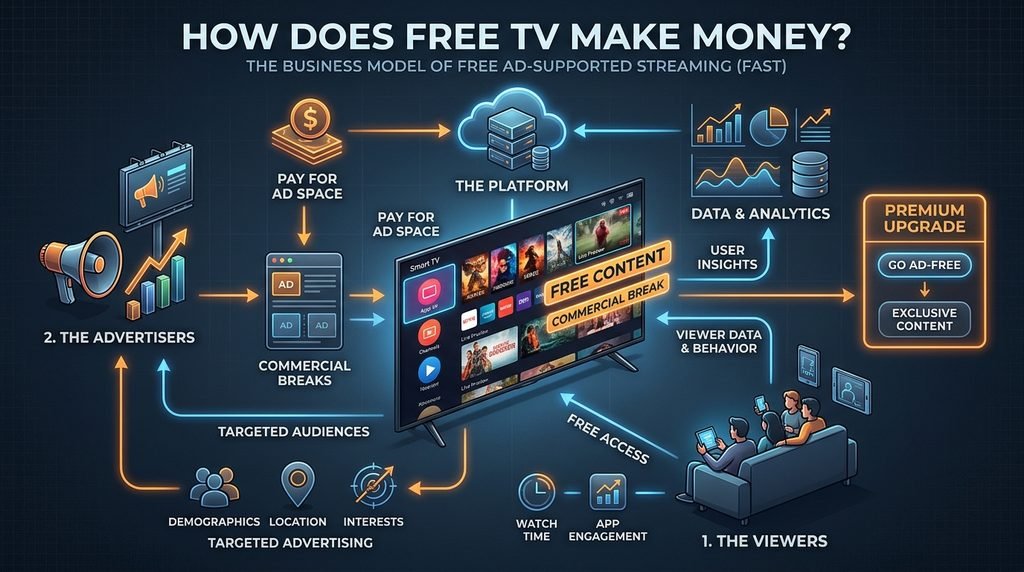
Free TV networks generate revenue primarily through commercial advertising, viewer data monetization, and premium service upgrades. Rather than charging end-users directly, broadcasters sell audience attention to corporate advertisers who pay for commercial time slots during programming. This model funds production, licensing, and broadcast infrastructure.
Ad-Supported Revenue Models
Television networks and streaming apps rely on advertising revenue to maintain free access. Broadcast networks air local and national commercials during scheduled breaks, while FAST streaming services deliver targeted digital ads customized to user demographics. Advertisers pay higher rates for peak viewing times and popular live events, which offsets the cost of broadcasting without subscription fees.
Data Monetization and Premium Upsells
Modern digital free TV services often collect anonymized viewing habits, device types, and location data to improve targeted ad delivery. Many free platforms also serve as gateways for premium paid services. For example, free ad-supported apps often prompt users to upgrade to commercial-free tiers or rent newly released movies, leveraging free content to build a base of paying customers.
What Are the Hidden Costs of Free Television?
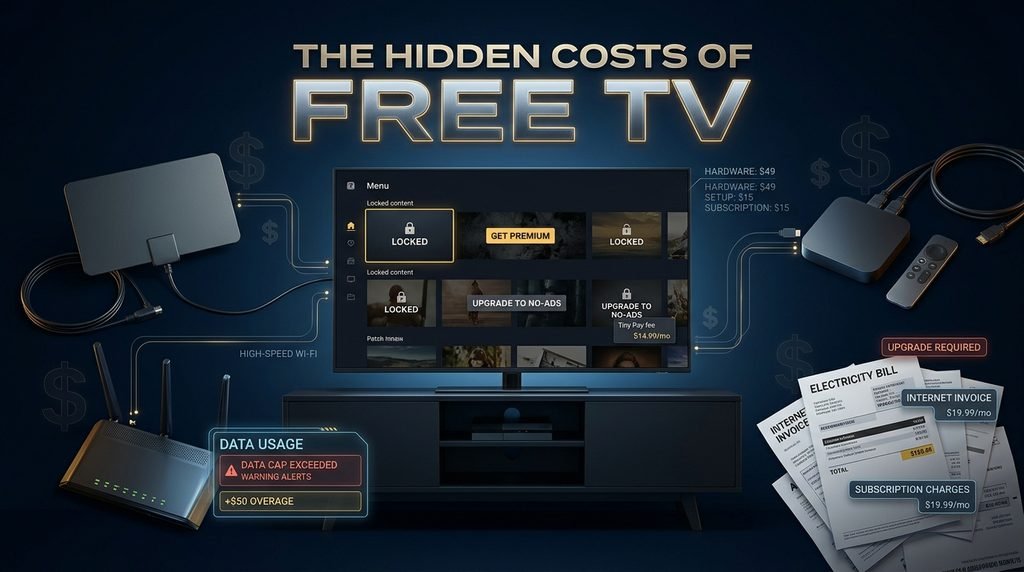
The primary hidden costs of free television include upfront hardware purchases, broadband internet subscription fees, data cap consumption, and potential internet service provider (ISP) speed throttling. While you will not receive a monthly bill from the broadcast service, maintaining access requires functioning equipment and adequate network infrastructure.
Hardware, Antennas, and Tuners
Watching over-the-air television requires physical equipment. Depending on your distance from broadcast towers, an indoor or outdoor antenna ranges from $20 to over $150. If you wish to watch channels across multiple TVs or record live broadcasts, multi-tuner network devices (such as Tablo or HDHomeRun) add significant initial expense.
Internet Data and ISP Throttling
Streaming free ad-supported TV uses substantial broadband data. High-definition streams consume approximately 3 GB of data per hour, while 4K streams can use up to 7 GB per hour. Households with monthly ISP data caps may incur overage fees if they stream continuous free TV. Additionally, high data consumption during peak hours can lead to ISP bandwidth throttling, resulting in buffering or degraded picture quality.
Key Takeaway: Free TV removes recurring subscription bills, but it relies on user-provided hardware, home internet connections, and commercial tolerance.
How Does Free TV Compare to Premium IPTV Services?
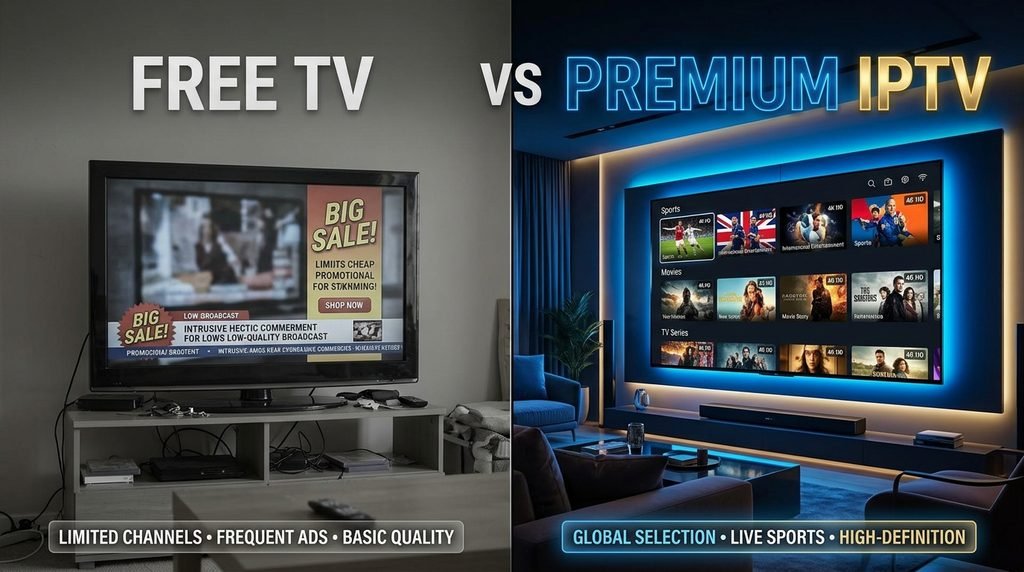
Free TV offers essential local broadcasts and ad-supported movie catalogs, whereas premium IPTV services provide comprehensive live channel lineups, international programming, premium live sports, and vast on-demand libraries. Evaluating the structural differences between these formats helps viewers choose the right entertainment option.
Channel Variety and Live Sports Coverage
Over-the-air broadcasts typically deliver between 10 and 50 local network channels depending on geographical location. FAST streaming apps provide hundreds of thematic channels, but they rarely include live out-of-market sports, premium pay-per-view (PPV) events, or full cable news packages. In contrast, internet protocol television delivers extensive cable networks, specialized sports passes, and international broadcasts in a unified interface.
Evaluating Xtreme HD IPTV for Full Streaming Coverage
For viewers who find free TV options limited by channel selection or ad interruptions, services like Xtreme HD IPTV provide an alternative streaming solution. Operating as an internet-based television service, Xtreme HD IPTV gives users access to over 20,000 live TV channels, full Electronic Program Guide (EPG) support, anti-freeze streaming tech, and extensive Video-on-Demand (VOD) catalogs across popular devices like Amazon Firestick, Android TV, and Smart TVs.
The table below outlines the practical differences between free television models and premium IPTV platforms based on operational documentation:
| Feature / Criteria | Over-the-Air (OTA) Antenna | FAST Streaming Apps | Xtreme HD IPTV |
| Monthly Subscription Fee | $0 | $0 | Low Monthly Fee |
| Upfront Hardware Cost | $20 – $150+ (Antenna/Tuner) | $0 (Uses existing device) | $0 (Uses existing streaming device) |
| Commercial Ads | Standard broadcast ads | Frequent digital ads | Stream-dependent / Minimal |
| Live Sports & PPV | Local major networks only | Limited highlights / niche sports | Comprehensive live sports & PPV events |
| Channel Selection | 10 – 50 local channels | 100 – 300 curated channels | 20,000+ live channels |
| EPG & Catch-Up Support | Depends on TV tuner hardware | Basic channel guide | Built-in EPG & recording support |
Frequently Asked Questions
Is over-the-air broadcast TV completely free to watch?
Yes, receiving over-the-air broadcast signals is completely free of monthly charges. You only need to purchase a digital HD antenna to pick up local channels transmitting in your area.
Do free TV streaming apps require a credit card?
No, legitimate free ad-supported streaming apps like Tubi and Pluto TV do not require credit card details. You can download the app and watch content immediately with ad support.
Why do some free TV apps show so many commercials?
Free streaming services rely entirely on advertising revenue to license television shows and pay for server bandwidth instead of charging users monthly subscription fees.
Can you watch live sports on free television?
Over-the-air antennas broadcast major network sports events, but free TV apps rarely offer live out-of-market sports or premium pay-per-view events due to expensive licensing rights.
What is the difference between free TV and IPTV?
Free TV relies on antenna signals or free ad-supported streaming apps. IPTV delivers thousands of live international channels, sports packages, and on-demand libraries over the internet via a paid subscription.
Recommended Next Step
If you are looking to expand your viewing choices beyond basic free channels, explore the Xtreme HD IPTV Channel List to discover over 20,000 live channels, premium sports, and HD on-demand entertainment.